
Have you ever felt like your life just… paused? Not in a peaceful, restful way more like everything around you is moving forward and you’re just standing completely still.
You’re not necessarily unhappy. But you’re not excited either. You’re doing your routine, showing up, getting through the days but deep down, there’s this quiet, uncomfortable feeling: “I feel stuck.”
I know that feeling well. I’ve sat with it more times than I’d like to admit going through the motions, waiting for some kind of clarity or spark that just wouldn’t come.
If that’s where you are right now, take a breath. You’re not alone, and you’re not broken you’re just in a transition. And this post will gently help you move through it.
🌿 30 Things to Do When You Feel Stuck in Life
🌸 Pause Before You Try to Fix Everything
The first instinct when you feel stuck is usually to frantically search for a solution to figure your whole life out immediately.
But in my experience, that kind of frantic energy almost always makes it worse. The best place to start is with stillness, not speed.
1. Stop Trying to Figure Your Entire Life Out Today
You don’t need all the answers right now, and chasing them when your mind is already overwhelmed will only exhaust you further.
Give yourself genuine permission to not know just for today and notice how much lighter that feels.
I used to spend whole evenings desperately trying to “solve” my life, and I’d go to bed more anxious than when I started. Now when I feel stuck, the first thing I do is actively decide to stop trying to fix everything at once.
2. Take a Proper Break (Without Guilt)
Not scrolling, not “resting while half-working” a real break where you do something that genuinely replenishes you.
Research from the University of Illinois found that brief mental breaks actually improve focus and sustained attention, meaning stepping away is often more productive than pushing through.
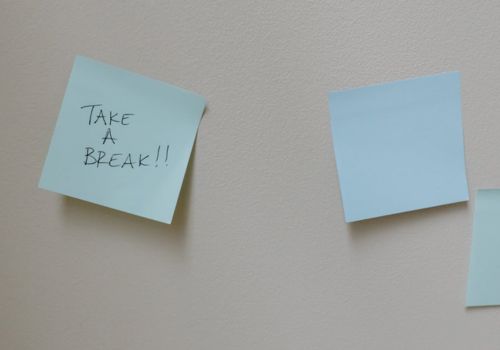
Rest is not the opposite of progress. It’s often what makes the next step possible.
3. Sit in Silence for a Few Minutes
Find a quiet spot, put your phone down, and just let your thoughts slow down on their own without trying to direct them.
Silence feels uncomfortable at first especially when you’re anxious and stuck but it’s where a lot of genuine clarity actually begins to surface.
I started spending five minutes in silence every morning, and it’s changed how I approach difficult days more than almost anything else I’ve tried.
4. Take a Deep Breath and Reset Your Body
When you feel stuck, your body usually feels it too tight chest, shallow breathing, a low-level hum of anxiety.
Taking five slow, deep breaths inhale through the nose, long exhale through the mouth directly activates your nervous system’s calm response and gives you a slightly cleaner starting point.
The American Institute of Stress notes that diaphragmatic breathing is one of the most accessible and evidence-backed tools for reducing stress in the moment. It takes thirty seconds and it genuinely works.
☁️ Get Honest With Yourself (Gently)
Getting unstuck usually requires some honest reflection but the key word is gently.
You’re not interrogating yourself; you’re just trying to understand what’s actually happening beneath the surface feeling.
5. Ask: “What Exactly Feels Stuck?”
Get specific is it your career, your daily routine, your relationships, your sense of direction, or something else entirely? When “stuck” is a vague cloud, it’s impossible to address.
When you name it clearly, it immediately becomes something more workable.
I find that when I journal about this question honestly, the answer is usually more specific than I expected and often different from what I assumed was the problem.
6. Write Down Everything That’s Been Bothering You
Open a notebook and write without filtering all the frustrations, the quiet disappointments, the things you’ve been pushing aside, the thoughts you haven’t said out loud.
Getting it all onto paper creates distance between you and the feelings, and that distance is surprisingly clarifying.
Expressive writing research by Dr. James Pennebaker has consistently shown that putting difficult thoughts and emotions into words measurably reduces stress and helps people process complex situations more clearly. Five messy, honest minutes in a journal can do a lot.
7. Notice What Has Been Draining Your Energy
Pay honest attention to what consistently leaves you feeling depleted certain people, habits, environments, commitments, or thought patterns.
Often the thing making you feel stuck isn’t a missing direction; it’s something that’s actively consuming the energy you’d need to move forward.

When I did this exercise during one of my most stuck periods, I realised a single draining commitment was quietly eating all my motivation. Letting it go created more momentum than any goal-setting session I’d tried.
8. Identify What You’ve Outgrown
Not everything in your life is meant to stay forever and sometimes what feels like being “stuck” is actually just staying loyal to a version of yourself or a situation you’ve genuinely outgrown.
Ask yourself honestly: is there something I’m holding on to out of habit or fear rather than genuine alignment?
Letting go of what no longer fits is not giving up it’s making space. And space is exactly what’s needed when you feel stuck.
🌼 Start Small
When you feel stuck, big goals and dramatic changes feel impossible and honestly, they’re usually not the answer anyway. Small, manageable steps are what actually build momentum.
9. Change One Tiny Part of Your Routine
Something as small as walking a different route, making breakfast before coffee, or reading for ten minutes before bed can break the sameness that feeds the stuck feeling.
Your brain gets very comfortable with patterns, and a tiny disruption creates just enough novelty to shift your perspective.
I changed the order I did my morning tasks one week when I felt completely stuck, and it sounds almost too small to matter but the freshness of it genuinely sparked something.
10. Do One Thing You’ve Been Avoiding
Pick the one task you’ve been putting off the longest and just do it not because your whole life depends on it, but because avoidance is one of the biggest contributors to the stuck feeling.
Every avoided thing sits in the back of your mind quietly consuming energy.
Psychologists refer to this as the Zeigarnik effect the brain gives disproportionate mental space to unfinished tasks. Completing even one clears more headspace than you’d expect.
11. Set a Small, Realistic Goal for Today Only
Not for your life, not for the year just for today. What is one small, specific thing you could actually do by the end of today that would feel good to have done?
That’s the only goal you need right now.
Small wins release dopamine, which is the brain’s “keep going” chemical. Building momentum through small daily completions is how most meaningful change actually begins, even when it doesn’t look impressive from the outside.
12. Focus on Progress, Not Perfection
Progress means moving even slightly, imperfectly, in a generally good direction. Perfection means waiting until conditions are ideal before you begin and ideal conditions almost never arrive.

I have wasted so much time in my life waiting to feel “ready” before starting things.
Now I try to remind myself that starting messy and adjusting along the way is always better than not starting at all.
🌿 Shift Your Environment
Your environment has a quiet but powerful influence on how you feel and how you think.
When you change your surroundings even slightly you give your brain a new context, and new contexts often produce new thoughts.
13. Clean or Organise One Small Space
Clutter and disorganisation create low-level cognitive stress that compounds the stuck feeling. Clearing even one small area a desk, a shelf, the inside of a bag creates a tiny but real sense of control and clarity.
Research published in Personality and Social Psychology Bulletin found that people who described their homes as cluttered had higher cortisol levels throughout the day.
Your environment is not neutral it’s either helping or hindering you.
14. Open Your Windows and Let Fresh Air In
Fresh air and a change in the quality of your indoor environment can shift your mental state in ways that feel disproportionate to how simple the action is.
Stale, closed indoor air genuinely affects mood and concentration more than most people realise.
Open your windows for even ten minutes and notice whether the room and you feel different afterward.
15. Change Your Surroundings for a Bit
Take your laptop to a café, sit in a park, work from a different room, or simply go for a walk somewhere you don’t usually go.
A change of scenery gives your brain new visual and sensory input, which can interrupt the thought loops that keep the stuck feeling in place.
Some of my clearest ideas and most useful realisations have come while sitting in a coffee shop with a notebook not because the café is magic, but because being somewhere different made me think differently.
16. Refresh Your Space with Small Changes
New bedsheets, rearranged furniture, a plant, a different desk lamp small environmental changes can create a surprising sense of freshness and possibility.
You don’t need to redecorate; you just need enough novelty to break the feeling that everything is exactly the same as it always is.
Your space should feel like it’s supporting the person you’re becoming, not the person you’re trying to move past.
💛 Reconnect With Yourself
Feeling stuck is often, at its core, a disconnection from your own values, desires, and sense of self. These ideas are about gently finding your way back to yourself.
17. Do Something You Used to Enjoy
Think of something you genuinely loved doing before life got busy and complicated a hobby, a creative activity, a place you used to go and do it again, even if it feels awkward at first.
You don’t have to feel motivated before you start; often the feeling comes after you begin.
I went back to journaling after a two-year gap during one of my most stuck periods. The first few entries were stilted and strange, but by the third or fourth day, something had genuinely loosened in me.
18. Spend Time Alone Intentionally
Not lonely, isolated aloneness but deliberate, peaceful solitude where you’re present with yourself without the noise of other people’s needs and opinions.

Psychologist Ester Buchholz argued that periods of genuine solitude are essential for self-renewal and creative thinking they let you hear your own voice again.
Even one hour a week of true, intentional alone time doing something quiet, just for you can meaningfully reconnect you with yourself.
19. Ask Yourself: “What Do I Actually Want?”
Not what your family wants for you, not what society says you should want by this age, not what looks impressive on paper what do you actually want from your life?
This question is harder than it sounds, especially when you’ve spent years prioritising other people’s expectations.
I sit with this question in my journal regularly now.
The answers change as I change, and that’s okay the point is to keep listening rather than just following the default path.
20. Be Kind to Yourself During This Phase
You are not failing by feeling stuck. You’re figuring things out, and figuring things out takes time and patience and a lot of not-knowing.
Dr. Kristin Neff’s research on self-compassion shows that being kind to yourself during difficult periods is not soft or indulgent it’s one of the most effective ways to build the resilience needed to actually move forward.
Harsh self-judgement doesn’t speed up the process. Kindness does.
🌙 Let Go of Pressure
A lot of the weight in feeling stuck comes not from the stuckness itself but from the pressure to have it all figured out the belief that you should be further along by now.
Releasing that pressure is one of the most genuinely helpful things you can do.
21. Stop Comparing Your Life to Others
Leon Festinger’s social comparison theory explains why we instinctively measure ourselves against others and why it almost always makes us feel worse, because we unconsciously compare our insides to other people’s outsides.
You’re seeing someone’s highlight reel and comparing it to your full, complicated, in-progress reality.
Every time you catch yourself doing this, gently remind yourself: their path has nothing to do with yours. You’re not in the same race.
22. Accept That It’s Okay to Feel Lost Sometimes
Lost doesn’t mean broken. Lost means you haven’t found the next direction yet and that is a normal, temporary, and even necessary part of growth.
Some of the most meaningful turning points in people’s lives begin with a period of feeling genuinely lost.
Give yourself permission to be in the middle of the story without knowing how it ends.
23. Release the Need to Have Everything Planned
Plans are useful, but an obsessive need for certainty can become a way of avoiding the discomfort of not knowing which ironically keeps you more stuck than the uncertainty itself.
Practice sitting with open questions rather than rushing to fill every gap with an answer.
Uncertainty is not a problem to be solved. It’s just the natural texture of a life that’s still unfolding.
24. Allow Yourself to Move Slowly
Slow movement is still movement. A small step taken thoughtfully is worth far more than a giant leap taken out of panic, which usually lands you somewhere you didn’t want to be anyway.
Give yourself full permission to go slowly. Slow and intentional will always get you somewhere more true than fast and desperate.
✨ Take Gentle Action
Once you’ve rested, reflected, and released some pressure, gentle action becomes much more natural. These steps are about starting to move not dramatically, but genuinely.
25. Try Something New, Even Something Small
A new hobby, a new café, a new walking route, a new book genre, a class you’ve been curious about novelty is one of the most reliable ways to break the stuck feeling, because new experiences create new neural pathways and genuinely shift perspective.
Neuroscientist Tali Sharot notes that new experiences naturally engage the brain’s reward system in a way that familiar routines simply can’t.
You don’t need to find your life’s purpose in a new hobby. You just need to feel something different, and new things do that reliably.
26. Reach Out to Someone You Trust
Tell one person you trust that you’re going through a stuck period not to get advice, necessarily, but just to say it out loud to another human being.
Being heard and understood by someone who cares about you is one of the most powerful antidotes to the isolation that often comes with feeling stuck.
I’ve learned that I always feel slightly less stuck the moment I stop pretending to have it together and tell someone honest that I don’t.
27. Learn Something New
Pick up a book, watch a documentary, take a free online course, listen to a podcast on something you know nothing about.
Learning something new shifts your perspective and reminds your brain that the world is bigger than the particular corner of it that currently feels stuck.

Coursera, Skillshare, and YouTube all have free or low-cost options for exploring almost anything that interests you and the act of learning often sparks connections and ideas you couldn’t have anticipated.
28. Take One Step Toward Something That Excites You
Think of something anything that creates even a small flicker of excitement or curiosity when you imagine it.
Then take one small, concrete step toward it today not a plan, not a commitment, just one step.
Excitement is information. It’s your deeper self pointing toward something worth exploring, and following it even tentatively is one of the most honest things you can do when you feel stuck.
🌸 Ground Yourself in the Present
When you feel stuck, your mind tends to live either in an anxious future or a regretful past.
Coming back to the present moment where life is actually happening is one of the most grounding and clarifying things you can do.
29. Focus on Today, Not Your Entire Future
You don’t need to solve the next ten years. You just need to navigate today with a little more gentleness and intention.
What is one kind or useful thing you can do for yourself in the next few hours?
The future is built from todays. Taking care of this one carefully is always the right starting point.
30. Remind Yourself: “I Won’t Feel Stuck Forever”
This feeling as heavy and permanent as it can seem is temporary. Every person who has felt stuck and eventually moved through it can tell you that the stuckness didn’t last, even when it felt like it would never end.
You have moved through hard things before. You will move through this one too, probably more gently and more gradually than you currently imagine and that is completely okay.
🌿 Why Feeling Stuck Isn’t a Bad Thing
I know it doesn’t feel good. But being stuck is very often a sign that you’ve outgrown your current situation, that you’re ready for something new, or that your life is quietly asking for a change you haven’t yet found the courage or clarity to make.
Feeling stuck is often the beginning of growth that uncomfortable middle phase where your old life no longer fits, but your new one hasn’t fully formed yet.
The people who move through it most gracefully are usually the ones who stop fighting it and start listening to what it’s trying to tell them.
💫 What NOT to Do When You Feel Stuck
When you feel stuck, your first instinct might be to panic and try to fix everything overnight, compare yourself endlessly to people who seem further ahead, or force motivation that simply isn’t there yet. These responses almost always make things worse.
What actually helps is giving yourself permission to move slowly, feel uncertain, take small steps, and rest when you need to because clarity doesn’t come from pressure. It comes from space.
🌸 How I Personally Deal With Feeling Stuck
Every time I’ve hit a stuck period and there have been several my first thought is always: “I need to change my entire life.” And every time I’ve tried to act on that thought immediately, it’s gone badly.
What has actually worked, every single time, is much simpler. Cleaning one space. Changing one small thing in my routine. Taking a real break from the pressure to have it figured out.
Trying one new thing without needing it to be the answer. And slowly, without drama, things begin to shift not because I forced it, but because I made just enough room for something different to grow.
✨ Final Thoughts
Next time you feel stuck, don’t rush to escape the feeling. Pause, breathe, and ask yourself one simple question: “What is one small thing I can do to move forward today?”
Then do just that and trust that even the smallest step is still movement. 🌿✨
❓ FAQs About Feeling Stuck in Life
Why do I feel stuck even when nothing is technically wrong?
Feeling stuck without an obvious external reason is actually very common. It often happens when there’s a gap between where you are and where some part of you senses you could be even if that sense is vague and hard to articulate.
It can also happen when you’ve been running on autopilot for too long, when you’ve outgrown a situation without yet knowing what comes next, or when unacknowledged needs or values have been quietly unmet for a while.
Psychologists who study life transitions note that these periods of vague dissatisfaction are often preludes to meaningful growth the discomfort is the signal, not the problem itself.
How long does feeling stuck usually last?
It varies enormously depending on the person and the cause. A brief stuck period might lift within a few weeks of honest reflection and small changes.
A deeper stuck period particularly one connected to a significant life transition, burnout, or identity shift may take months to fully move through.
The most important thing is not to measure your progress by how quickly the stuck feeling disappears, but by whether you’re being honest with yourself, taking small steps, and treating yourself with patience throughout the process.
Is feeling stuck a sign of depression?
It can be, but it isn’t always. Feeling stuck low motivation, going through the motions, a sense of directionlessness overlaps with some symptoms of depression, but it doesn’t automatically mean you’re depressed.
The key difference is usually the persistence and breadth of the symptoms and whether they’re significantly affecting your ability to function.
If the stuck feeling has been present for more than two weeks, is accompanied by persistent low mood, loss of interest in most activities, or changes in sleep and appetite, it’s worth speaking to a doctor or therapist.
The NHS has a helpful overview of depression symptoms if you’re trying to understand what you’re experiencing.
What is the fastest way to get unstuck?
Genuinely action, even tiny action, is the fastest route. Behavioural activation, a technique widely used in therapy, shows that doing things even before you feel like it creates the mood shift, rather than the other way around.
You don’t need to feel ready or motivated to start; starting is what creates the feeling of momentum.
The smallest possible action you can take today toward anything meaningful is worth more than any amount of thinking, planning, or waiting to feel inspired.
How do I know what direction to go when I feel stuck?
You usually don’t and that’s okay. Direction tends to emerge through movement, not through thinking about movement.
Start by paying attention to what creates even the faintest spark of interest or energy in you, and follow that curiosity gently without needing it to be a definitive answer.
Executive coach and author Jennifer Garvey Berger describes this as “moving toward the edge of your comfort” rather than making giant leaps small experiments in new directions reveal far more than elaborate planning ever could.
Can therapy help when you feel stuck?
Absolutely a good therapist can help you identify patterns, unmet needs, and internal blocks that are very difficult to see clearly from inside the experience.
Sometimes feeling stuck has roots in beliefs or habits that are hard to shift without professional support.
You don’t need to be in crisis to benefit from therapy. Psychology Today’s therapist finder is a helpful resource for finding someone who specialises in life transitions, identity, or personal growth if you’re ready to explore that option.

I’m Pamila, the voice behind LittleAuraLiving.I write about slow living, emotional wellness, and small habits that make everyday life feel a little lighter.